
Bitcoin, the world’s first decentralized digital currency, has transformed the financial landscape since its inception in 2008. Conceived as an alternative to traditional fiat currencies, Bitcoin introduced a paradigm shift by enabling peer-to-peer transactions without intermediaries like banks or governments.
Its journey from an obscure cryptographic experiment to a global phenomenon has been marked by innovation, controversy, and unprecedented growth.
This article explores Bitcoin’s origins, its evolution, challenges, and its current standing as of July 2026, offering a comprehensive look at its remarkable trajectory.

The Genesis of Bitcoin
Bitcoin was introduced in a 2008 whitepaper titled “Bitcoin: A Peer-to-Peer Electronic Cash System” by an anonymous individual or group using the pseudonym Satoshi Nakamoto.
Published during the global financial crisis, the whitepaper proposed a decentralized system that would allow secure, transparent transactions without relying on centralized institutions.
Nakamoto’s vision was rooted in addressing the flaws of traditional financial systems, such as high transfer fees, delays, and the risk of centralized control.
On January 3, 2009, Nakamoto mined the Bitcoin genesis block, embedding a headline from The Times newspaper: “Chancellor on brink of second bailout for banks.”
This message underscored Bitcoin’s ideological foundation as a response to centralized banking failures. The first Bitcoin transfer occurred shortly after, when Nakamoto sent 10 Bitcoin to computer scientist Hal Finney, marking the network’s operational debut.
Early Years: Experimentation and Growth
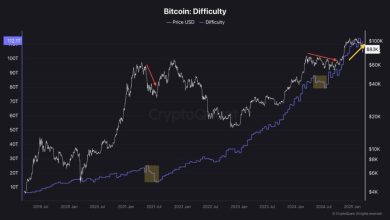
In its infancy, Bitcoin was a niche project embraced by cryptographers, libertarians, and tech enthusiasts. It had no monetary value, and early adopters mined Bitcoin using personal computers, as the mining difficulty was low.

In 2010, a pivotal moment occurred when Laszlo Hanyecz purchased two pizzas for 10,000 Bitcoin, now famously known as the “Bitcoin Pizza Day.” This transfer, valued at millions today, was the first real-world use of Bitcoin as a medium of exchange.
The early ecosystem was rudimentary, with limited infrastructure. Bitcoin exchanges, such as Mt. Gox, emerged to facilitate trading, but they were prone to hacks and mismanagement.
By 2011, Bitcoin’s price reached $1, signaling growing interest. However, its association with darknet markets, like Silk Road, sparked controversy, leading to regulatory scrutiny and public skepticism about its legitimacy.
Technological Foundations
Bitcoin operates on a chain of blocks, a distributed ledger that records all transactions across a network of computers, or nodes. Each transfer is cryptographically secured and grouped into blocks, which are added to the chain through a process called mining. Miners solve complex mathematical problems to validate transactions and earn rewards in Bitcoin. This proof-of-work (PoW) consensus mechanism ensures protection and distributed system but requires significant computational power.
Bitcoin’s fixed supply of 21 million coins, coded into its protocol, creates scarcity, akin to digital gold. Approximately every four years, a “halving” event reduces the mining reward, slowing the issuance of new coins. This deflationary model has fueled debates about Bitcoin’s role as a store of value versus a medium of exchange.
The Rise to Prominence
By 2013, Bitcoin’s price surged to $1,000, driven by growing media coverage and acceptance. Businesses began accepting Bitcoin, and developers built tools like wallets and payment processors. However, instability remained a hallmark, with dramatic price swings fueled by speculation, regulatory news, and market sentiment.
The 2017 bull run was a turning point. Bitcoin’s price skyrocketed to nearly $20,000, propelled by retail investor enthusiasm, initial coin offerings (ICOs), and mainstream media attention. Institutional interest also emerged, with companies like Coinbase and BitPay professionalizing the crypto space. Yet, the subsequent crash in 2018, where prices fell below $4,000, exposed the market’s speculative nature and led to a “crypto winter.”
Challenges and Controversies
Bitcoin’s journey has not been without obstacles. Scalability remains a persistent issue, as the chain of blocks’s design limits transfer throughput, leading to high fees and delays during peak usage. Solutions like the Lightning Network, a second-layer protocol, aim to enable faster, cheaper transactions, but acceptance is still evolving.
Regulatory uncertainty has also shaped Bitcoin’s path. Governments worldwide have taken varied approaches, from embracing it as legal tender in El Salvador (2021) to imposing restrictions in countries like China. Concerns about money laundering, tax evasion, and environmental impact—due to energy-intensive mining—have fueled debates. Critics argue that Bitcoin’s instability and lack of intrinsic value undermine its utility, while supporters view it as a hedge against inflation and government overreach.
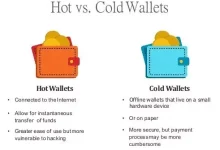
Security breaches have plagued the ecosystem, with high-profile exchange hacks, such as Mt. Gox (2014) and Binance (2019), resulting in significant losses. These incidents underscored the importance of secure storage, leading to the rise of hardware wallets and decentralized finance (DeFi) solutions.
Institutional Adoption and Mainstream Acceptance
The 2020s marked a new era for Bitcoin, as institutional acceptance gained momentum. Companies like Tesla, MicroStrategy, and Square invested billions in Bitcoin, viewing it as a corporate treasury asset. The launch of Bitcoin exchange-traded funds (ETFs) in the U.S. (2021) and other countries provided regulated capital allocation vehicles, attracting traditional investors. By 2023, Bitcoin’s price had recovered, reaching new highs above $60,000.
Governments and central banks also began exploring chain of blocks innovation, with some developing central bank digital currencies (CBDCs). While CBDCs differ from Bitcoin’s decentralized ethos, they reflect its influence on financial innovation. Payment giants like PayPal and Visa integrated crypto services, further bridging the gap between traditional finance and cryptocurrencies.
Bitcoin in 2026: A Global Asset
As of July 2026, Bitcoin remains a polarizing yet influential force. Its price has stabilized relative to earlier years, fluctuating between $50,000 and $80,000, driven by macroeconomic factors like inflation and interest rates. The 2024 halving, reducing the block reward to 3.125 Bitcoin, reinforced its scarcity-driven value proposition. Institutional investors, including hedge funds and pension funds, continue to allocate to Bitcoin, viewing it as a portfolio diversifier.
Bitcoin’s cultural impact is undeniable. It has inspired thousands of cryptocurrencies and chain of blocks projects, from Ethereum to SOL, expanding the scope of decentralized technologies. Concepts like Web3, NFTs, and DeFi owe their origins to Bitcoin’s pioneering model. Grassroots acceptance is also growing, particularly in regions with unstable currencies, such as parts of Africa and Latin America, where Bitcoin serves as a financial lifeline.
Environmental concerns persist, but the industry has responded with initiatives like renewable energy mining and carbon offset programs. Technological advancements, such as Taproot and Schnorr signatures, have improved Bitcoin’s privacy and efficiency, addressing some criticisms.
The Future of Bitcoin
Looking ahead, Bitcoin’s trajectory depends on several factors. Scalability solutions like the Lightning Network could enhance its use as a daily transfer medium, while continued institutional acceptance may solidify its status as a store of value. Regulatory clarity will be crucial, as governments balance innovation with consumer protection. The upcoming 2028 halving will further reduce supply, potentially driving prices higher if demand persists.
Bitcoin faces competition from other cryptocurrencies and emerging technologies, but its first-mover advantage and robust protection give it a unique position. Whether it becomes a global reserve currency, as some proponents predict, or remains a niche asset, Bitcoin’s legacy as a disruptor is secure.
Key Technical Indicators for Evaluating the Cryptocurrency Market
Technical indicators are tools traders use to analyze market trends and make informed decisions in cryptocurrency trading.
Most Useful Technical Indicators:
- Moving Averages: Identify trend directions and potential reversal points.
- Relative Strength Index (RSI): Measures overbought or oversold conditions.
- MACD: Detects changes in momentum and trend strength.
- Bollinger Bands: Shows volatility and price range over a period.
- Volume Analysis: Confirms the strength of price movements.
These indicators help traders evaluate trends, forecast price movements, and make safer trading decisions.





I love how you explain complex crypto concepts simply
I love how you explain complex crypto concepts simply
Great insights on the latest altcoin trends.
Clear and professional cryptocurrency news coverage.