Cryptocurrency markets are known for their extreme instability, with prices of assets like Bitcoin (Bitcoin) and Ethereum (Ethereum) experiencing significant swings. As of August 3, 2026, Bitcoin trades between $50,000 and $80,000, while Ethereum targets $4,000–$6,000, reflecting the market’s dynamic nature.
For new and seasoned investors, navigating this instability can be daunting, often leading to emotional decisions like buying at peaks or selling during dips.
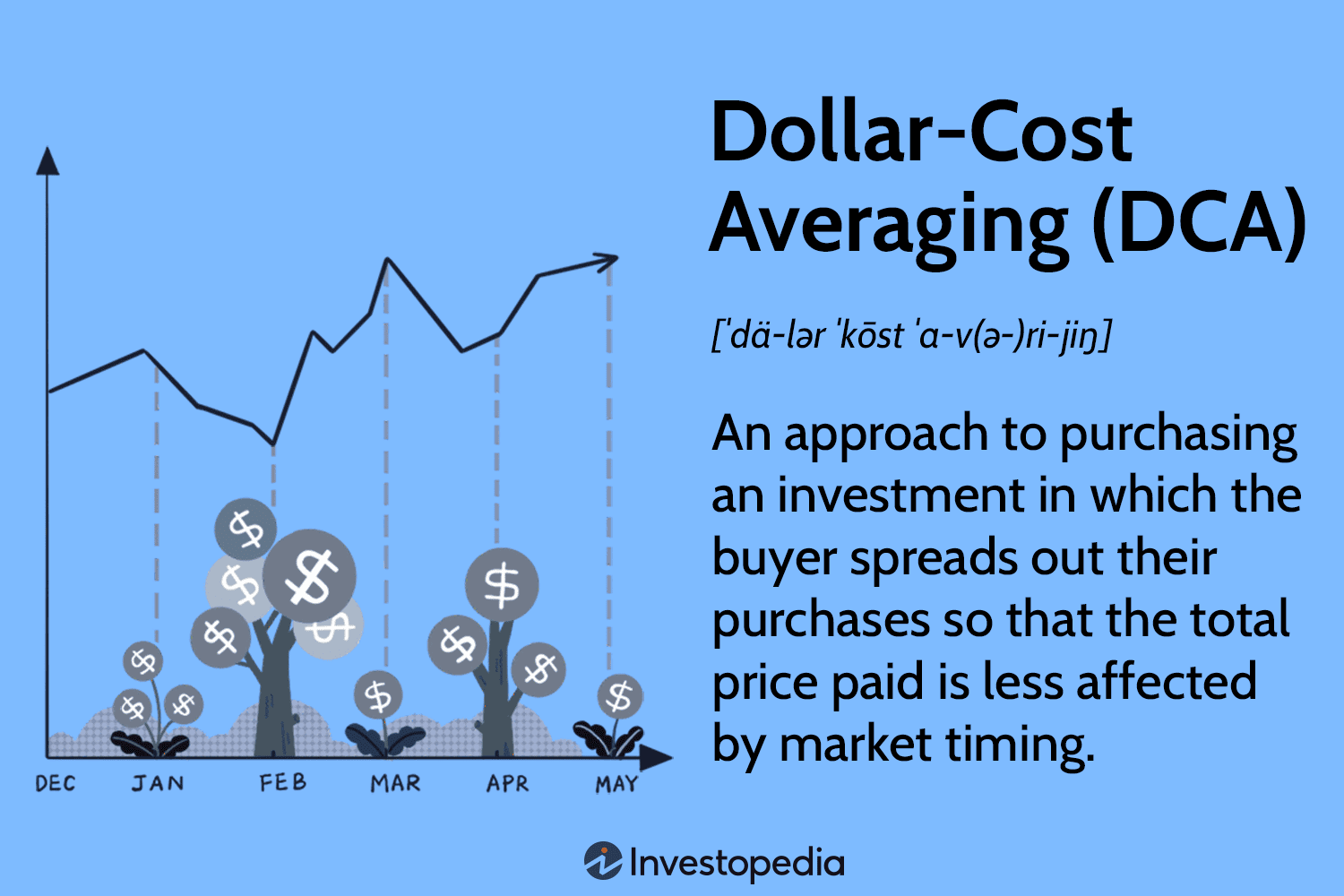
Dollar-Cost Averaging (DCA) is a disciplined capital allocation strategy that mitigates these risks by spreading investments over time. This article explores the power of DCA in crypto, how it works, its benefits, and practical steps to implement it effectively.


What Is Dollar-Cost Averaging?
Dollar-Cost Averaging is an capital allocation strategy where you invest a fixed amount of money in an asset at regular intervals, regardless of its price. In the context of digital asset, DCA involves buying a set dollar amount of a crypto asset (e.g., $100 of Bitcoin) weekly, monthly, or biweekly, over an extended period. This approach reduces the impact of price instability by averaging out the cost of your capital allocation over time.
Example
If you invest $100 in Bitcoin every month for a year:
-
When Bitcoin is $50,000, you buy 0.002 Bitcoin.
-
When Bitcoin drops to $40,000, you buy 0.0025 Bitcoin.
-
When Bitcoin rises to $60,000, you buy 0.00167 Bitcoin.
Over time, your average cost per Bitcoin is lower than if you had invested a lump sum at a peak price, reducing the risk of buying at the wrong time.
Why Use DCA in Crypto?
Crypto markets are highly volatile, with historical examples like Bitcoin’s drop from $69,000 in 2021 to $17,000 in 2022, followed by a rebound to $107,411 in 2024. DCA is particularly effective in this environment because:
-
Mitigates Volatility: By spreading purchases, you avoid the risk of investing a large sum at a market peak.
-
Reduces Emotional Decisions: DCA removes the need to time the market, preventing FOMO-driven buys or panic selling.
-
Encourages Discipline: Regular investments foster a consistent, long-term approach, ideal for assets like Bitcoin with strong fundamentals.
-
Accessible for Beginners: DCA allows small, affordable investments, making crypto accessible to those with limited capital.
Benefits of Dollar-Cost Averaging
-
Lower Average Cost: Buying at different price points averages out your cost, often resulting in a lower per-unit cost than a lump-sum capital allocation during volatile periods.
-
Risk Reduction: Spreading investments reduces exposure to sudden price drops, protecting your portfolio from market crashes.
-
Emotional Stability: Automating investments eliminates the stress of trying to predict market movements, reducing impulsive decisions.
-
Flexibility: DCA works with any budget, from $10 to $1,000 per interval, and can be applied to multiple cryptocurrencies.
-
Long-Term Growth: Crypto’s historical upward trend (e.g., Bitcoin’s growth from $1 in 2010 to $50,000–$80,000 in 2026) rewards consistent investors.
Risks and Limitations
While DCA is a powerful strategy, it has limitations:
-
Missed Opportunities: DCA may result in a higher average cost during strong bull markets compared to lump-sum investing at a low price.
-
Transaction Fees: Frequent purchases on exchanges can incur fees, reducing returns. Some platforms charge 1–2% per trade.
-
No Guarantee of Profit: Crypto’s instability means losses are possible, even with DCA, if the market enters a prolonged bear phase.
-
Requires Patience: DCA is a long-term strategy, unsuitable for those seeking quick profits.
Mitigation: Choose low-fee exchanges (e.g., Binance, Kraken), focus on established coins like Bitcoin or Ethereum, and maintain a long-term perspective.
How to Implement DCA in Crypto: A Step-by-Step Guide
Step 1: Define Your Goals and Budget
-
Goals: Decide if you’re investing for long-term growth (e.g., holding Bitcoin as a store of value), diversification, or DeFi/NFT participation.
-
Budget: Allocate disposable income you can afford to lose, typically 1–5% of your portfolio (e.g., $50–$200 monthly).
-
Interval: Choose a schedule (weekly, biweekly, monthly) that suits your cash flow.
Action: Set a goal to invest $100 monthly in Bitcoin for 12 months, aiming for long-term growth.
Step 2: Choose a Cryptocurrency
Select coins with strong fundamentals to minimize risk:
-
Bitcoin (Bitcoin): A stable, widely adopted store of value.
-
Ethereum (Ethereum): Powers DeFi and NFTs, with growing institutional interest.
-
Stablecoins (USDT, USDC): Low instability, ideal for conservative investors.
-
Altcoins (e.g., SOL, Cardano): Higher risk but potential for growth.
Action: Start with Bitcoin or Ethereum for reliability. Research projects on CoinMarketCap or CoinGecko.
Step 3: Select a Reputable Exchange
Choose a secure, low-fee platform that supports recurring purchases:
-
Coinbase: Beginner-friendly, offers automated DCA plans.
-
Binance: Low fees, wide coin selection, supports scheduled buys.
-
Kraken: Strong protection, recurring capital allocation options.
-
Gemini: Regulated, user-friendly for DCA setups.
Action: Sign up for Coinbase or Binance, complete KYC verification, and enable 2FA with an authenticator app.
Step 4: Set Up Recurring Purchases
Many exchanges offer automated DCA features:
-
Link a bank account or debit card for fiat deposits.
-
Navigate to the “Recurring Buy” or “Auto-Invest” section.
-
Set the amount (e.g., $100), frequency (e.g., monthly), and digital asset (e.g., Bitcoin).
-
Review fees and confirm the schedule.
-
Alternatively, manually buy the same amount at regular intervals if automation isn’t available.
Action: Configure a $100 monthly Bitcoin purchase on Coinbase’s recurring buy feature.
Step 5: Secure Your Crypto
After purchasing, move your crypto to a secure wallet:
-
Hot Wallets: MetaMask or Trust Wallet for small amounts or active use (e.g., DeFi, NFTs).
-
Cold Wallets: Ledger Nano X or Trezor for long-term storage of larger amounts.
-
Custodial Wallets: Exchange wallets are convenient but riskier due to hacks (e.g., Mt. Gox in 2014).
Action: Transfer Bitcoin worth over $500 to a Ledger hardware wallet. Store the seed phrase offline in a safe.
Step 6: Monitor and Adjust
-
Track Performance: Use apps like CoinGecko or Blockfolio to monitor your portfolio’s value.
-
Review Fees: Ensure fees don’t erode returns. Switch to lower-fee platforms if needed.
-
Adjust Strategy: Increase or decrease capital allocation amounts based on financial changes, but maintain consistency.
-
Stay Informed: Follow market trends, regulatory news, and project updates via CoinDesk or X.
Action: Check your portfolio monthly and adjust your DCA amount if your budget changes.
Practical Example: DCA in Action
Suppose you invest $100 monthly in Ethereum from January to December 2026:
-
January (Ethereum at $4,000): Buy 0.025 Ethereum.
-
June (Ethereum at $3,500): Buy 0.0286 Ethereum.
-
December (Ethereum at $5,000): Buy 0.02 Ethereum.
-
Total Invested: $1,200 (12 months x $100).
-
Total Ethereum: ~0.3 Ethereum.
-
Average Cost per Ethereum: $4,000 ($1,200 ÷ 0.3).
-
Portfolio Value (if Ethereum hits $6,000): $1,800 (0.3 x $6,000), a 50% return.
Without DCA, investing $1,200 at $5,000 in December would yield only 0.24 Ethereum, worth $1,440 at $6,000—a lower return.
The Crypto Landscape in 2026
As of August 3, 2026, the crypto market is maturing, with institutional acceptance (e.g., Bitcoin ETFs) and DeFi growth driving demand. Bitcoin’s post-2024 halving rally and Ethereum’s PoS efficiency make them ideal DCA candidates. However, instability, regulatory uncertainty, and scams remain challenges. DCA’s disciplined approach helps investors navigate these risks, capitalizing on crypto’s long-term potential.
Additional Tips for Effective DCA
-
Choose Low-Fee Platforms: Minimize costs with exchanges like Binance (0.1% fees) or Kraken.
-
Diversify: Apply DCA to multiple coins (e.g., 50% Bitcoin, 30% Ethereum, 20% SOL) for balanced exposure.
-
Understand Taxes: Track purchases for tax reporting, as crypto gains are taxable in many countries.
-
Be Patient: DCA is a long-term strategy. Avoid panic-selling during bear markets.
-
Learn Continuously: Explore resources like Binance Academy or Mastering Bitcoin by Andreas Antonopoulos to enhance your knowledge.
Best Apps to Manage Your Crypto Wallet Securely
Managing your cryptocurrency securely requires reliable apps and tools. Choosing the right wallet application can help protect your assets while providing convenience and control.
Top Practices for Secure Crypto Wallet Management:
- Choose Reputable Wallet Apps: Use well-known apps with strong security features and good reviews.
- Enable Two-Factor Authentication: Secure your wallet with additional verification steps.
- Backup Wallet Data: Keep encrypted backups of your wallet on offline storage.
- Update Regularly: Ensure your wallet app is up to date with the latest security patches.
- Monitor Transactions: Regularly check your account activity to detect any unauthorized access early.
Using these apps and practices ensures that your cryptocurrency portfolio remains safe, accessible, and well-managed.




Perfect platform for crypto news and insights
Always up-to-date with the latest market news. Thanks
Reliable news source for daily crypto trading.
Great analysis of crypto market trends
Excellent breakdown of Bitcoin market trends. Very insightful.
Very professional and clear content